Food as a Medium for Transmitting Emotion
Like Water for ChocolateFood as a Medium for Transmitting Emotion is a governing idea in the novel: cooking and eating do more than sustain the family or mark occasions. They carry feelings from one person to another, make private experience collective, and preserve memory beyond the lives of those who first prepared a dish. From Tita’s childhood association with onions to the family cookbook inherited by a later generation, food provides both a bodily medium for emotion and a narrative form for passing it on.
Food, the Body, and Inherited Memory
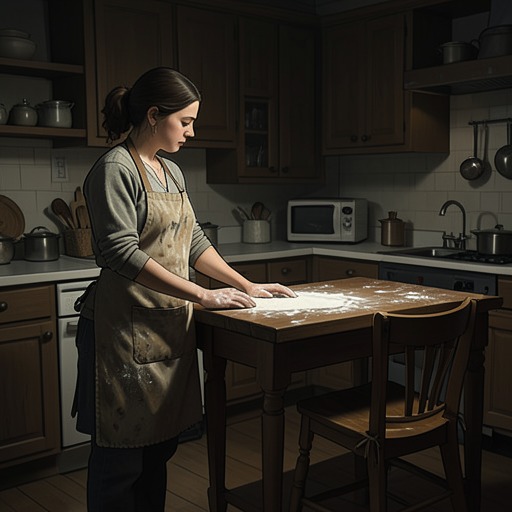
The connection begins with the narrator’s account of chopping onions. The narrator describes being prone to tears while preparing them, a sensitivity Mama had compared to that of Tita. Family memory makes the association larger than a cooking mishap: according to Nacha’s story, Tita cried even before birth, and her sobbing brought on premature labor. She entered the world on the kitchen table, surrounded by the smells of food being prepared, and was already crying. The scene binds a distinctive bodily response to the kitchen and gives food an intimate place in the family’s account of Tita’s beginnings.
This opening pattern makes emotion feel transmissible before it is expressed in words. The narrator’s response to onions recalls Tita, while the story of Tita’s birth passes through Nacha and survives as family lore. Food is thus connected both to bodily feeling and to the act of telling: a small kitchen task prompts a remembered story, and the remembered story gives that task an inherited meaning. The connection does not depend on every feeling being consciously chosen or explained; the recipe setting allows sensation and memory to meet.
Meals That Carry Feeling Between People
At Pedro and Rosaura’s wedding, the cake transforms a private emotional conflict into a collective experience. Tita, newly certain that Pedro loves her, eats her piece while preoccupied with the thought of telling Nacha. The other guests, by contrast, are overcome after tasting the cake by longing, sorrow, and frustration associated with lost love. Even Pedro and Mama Elena are caught up in the response. Tita alone seems untouched by it, leaving the celebration absorbed in her own happiness. The contrast makes the cake’s effect more than a general sign of emotion: the same food reaches the guests differently from the person whose feelings and circumstances surround it.
The meal of quail in rose petal sauce presents a more specific passage of feeling. Gertrudis experiences intense desire while eating, and the narration describes Tita as disappearing into the sauce, the quail, the wine, and the meal’s aromas, then entering Pedro through Gertrudis. The scene explicitly figures Tita as transmitter, Pedro as receiver, and Gertrudis as the medium through which the message passes. The food makes a connection possible without a direct conversation between Tita and Pedro; its emotional force is registered through another person’s response. Tita later prepares the dish each year in tribute to Gertrudis’s liberation, giving the meal a continuing place in family memory as well as in the original episode.
Food also shapes the mood of a gathering without concentrating its effects in one dramatic exchange. At a celebration where Tita has prepared mole, guests praise her cooking and ask for its secret. She answers that she uses a lot of love; Pedro is nearby, and their brief, conspiratorial glance recalls her work at the grinding stone. Mama Elena notices their shared look, while the guests become unusually cheerful. With revolution and danger surrounding the gathering, the meal provides a temporary interval in which people laugh together. The scene sets emotional transmission at two scales: a glance connects Tita and Pedro, while the food contributes to a wider, shared change in mood.
Recipes as a Form of Transmission
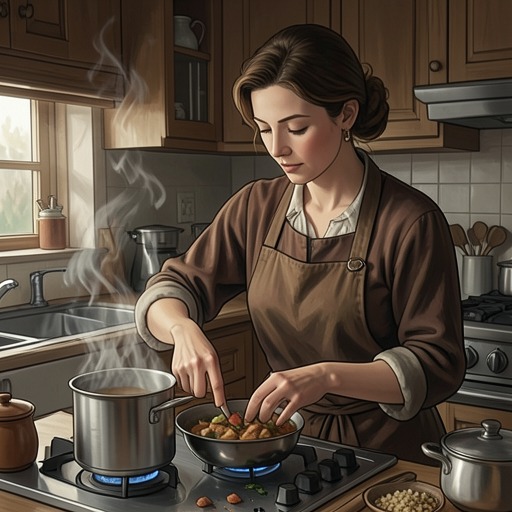
The dishes matter not only in the moment of eating but also through the instructions that preserve them. After the quail episode, Tita records how to serve the dish: the sauce covers the quail, with a perfect rose in the center and petals around the edge, or each serving can be arranged on an individual plate. She prefers individual plates because the garnish is less likely to slip out of place. That practical decision carries the memory of the meal into a reproducible form. As she begins writing her cookbook, images of Gertrudis continue to occupy her thoughts, so the recipe records both a method of preparation and an experience that remains vivid to her.
The cookbook ultimately outlasts the ranch. After Pedro and Tita die and the fire destroys the ranch, Esperanza returns from her wedding trip to find the cookbook beneath the remains. She later bequeaths it to the narrator. Its recipes therefore become the means by which the family’s past reaches someone who did not witness it directly. The narrator’s account makes the connection personal: preparing Christmas Rolls for a birthday recalls the mother who made them every year, along with her kitchen and the stories told during cooking. The narrator’s tears while preparing the dish also recall the inherited onion sensitivity associated with Tita.
Meaning and Reach
These episodes give food several related functions. A dish can concentrate feeling, as the wedding cake does; carry desire between people, as the quail meal does; or help a gathering temporarily share a mood, as the mole does. Preparation and recipe-writing extend those effects beyond the meal itself: Tita’s choices, memories, and techniques remain available to later cooks, even after the place where she cooked has disappeared.
The family cookbook makes this structure visible. Its recipes are simultaneously practical instructions and vessels of remembered experience. Through them, feeling moves between bodies, across relationships, and between generations, without becoming reducible to spoken explanation. The narrator’s continuing preparation of family food shows the process at work in the present: cooking recalls people and stories, while the inherited recipe keeps those memories in circulation.